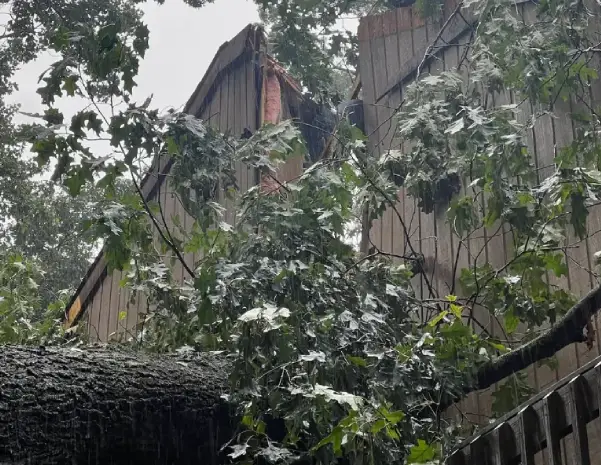
Severe windstorms moving across Sullivan and Hawkins counties can tear away asphalt shingles, damage metal flashing, or drop heavy tree limbs onto residential roof decks. When a storm breaches your roof, rainwater pours directly into attic insulation, ceiling drywall, and wall framing below.
In Kingsport and nearby Bristol, fast emergency roof tarping is the first line of defense against secondary water intrusion and protecting interior belongings.
Dangers of Delayed Emergency Roof Encapsulation
Leaving a damaged roof deck exposed to Appalachian storm cycles leads to rapid structural degradation inside the home.
Rainwater soaks loose fiberglass or cellulose attic insulation, destroying its thermal performance and adding immense weight to ceiling joists. Saturated ceiling drywall weakens, causing ceiling collapse in living rooms and bedrooms below. Water travels down interior wall studs, pooling behind baseboards and saturating subfloors in properties across Elizabethton and Johnson City. Unaddressed moisture trapped inside dark attic cavities creates ideal conditions for rapid fungal growth within 24 to 48 hours.
Deploying professional roof tarping immediately secures the building envelope, preventing weather-related secondary damage.
Professional Emergency Tarp Installation Standards
Proper emergency roof tarping requires heavy materials and specialized installation methods to withstand ongoing mountain winds.
Technicians first clear loose tree limbs, broken shingles, and storm debris from the damaged roof area. Heavy-duty woven polyethylene tarps are positioned over the breach, extending past the roof ridge to prevent water from running under the edges.
Anchor boards are secured along the tarp perimeter with specialized fasteners, creating a tight water barrier without causing additional damage to the surrounding sound shingles. The installation is inspected to ensure it sheds rainwater effectively away from vulnerable roof decking.
Interior Water Extraction and Structural Drying
Securing the roof deck is only step one. Once the building envelope is sealed against weather, technicians address interior water intrusion.
High-capacity water extractors remove standing water from carpets and subfloors. Saturated, unsalvageable attic insulation is removed under controlled conditions to prevent the spread of odors. Commercial LGR dehumidifiers and air movers stabilize interior relative humidity, drying structural roof rafters and ceiling joists back to safe moisture levels.
Safeguarding Your Home Against Mountain Storms
Overcoming storm damage requires specialized safety gear, technical expertise, and rapid execution. Securing your roof quickly limits interior damage and keeps your family safe.
If severe weather damages your roof structure, contact Rainbow Restoration of Tri-Cities, TN immediately. Our local emergency team is ready to secure your building envelope, extract interior water, and thoroughly dry your property. See what people are saying about us on Google.