
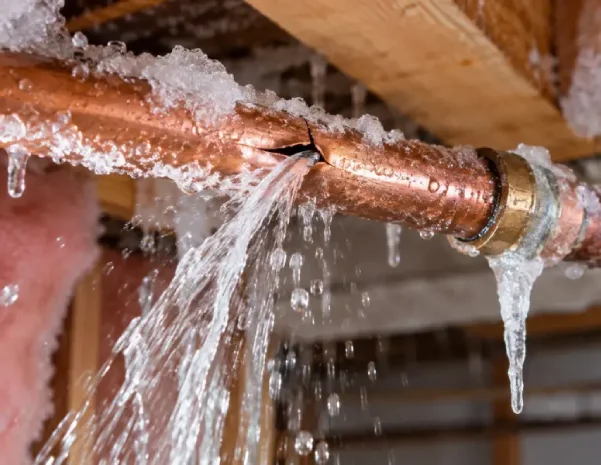
A sudden cold snap in East Tennessee can quickly escalate into a structural emergency in Johnson City. As temperatures fall, exposed plumbing in unheated crawl spaces or exterior walls may fracture due to ice expansion in copper and PEX supply lines. When temperatures rise, pressurized water floods floor joists, subflooring, and living areas.
Throughout Upper East Tennessee, winter pipe breaks create complex restoration challenges. Immediate water extraction and psychrometric drying are essential to protect home framing.
How Freezing Temperatures Impact Local Home Framing
Residential construction in Washington County often includes subflooring and framing that absorb water quickly. When a supply pipe bursts, water follows the path of least resistance through the structure:
- Subfloor plywood absorbs trapped liquid, swelling along tongue-and-groove joints and cupping floorboards.
- Ceiling drywall on lower levels absorbs water, sagging under the weight of liquid and risking sudden collapse.
- Insulation inside floor joist cavities retains water like a heavy sponge, preventing natural structural drying.
- Crawl spaces with limited light retain high humidity, creating ideal conditions for fungal growth within 24 to 48 hours.
By the time water appears at baseboards or ceiling fixtures in Elizabethton or Jonesborough, moisture has already penetrated deep into the framing.
The Applied Science of Structural Moisture Extraction
Shop vacuums remove only surface water. Complete restoration requires precise psychrometric drying, which balances temperature, humidity, and airflow to extract moisture from dense framing.
Technicians in Kingsport use non-invasive moisture meters and thermal imaging to identify hidden moisture behind tile, sheetrock, and subfloors. Once located, commercial dehumidifiers and air movers extract vapor from structural studs.
Opening windows during cold or damp Appalachian weather introduces humid air, which slows evaporation and increases the risk of further damage.
Documented Moisture Tracking for Complete Recovery
Restoring structural materials requires daily monitoring, not just visual inspection. Certified technicians record moisture levels in subfloors, wall plates, and joists throughout the drying process.
Technicians continuously monitor atmospheric readings, such as humidity ratios and dew points, to ensure moisture leaves building materials. Flooring and framing are checked against dry standards to prevent rot or mold.
Learn more about our Johnson City water damage restoration services.
Protecting Your Property Investment
Every residential property reacts differently to sudden water exposure. Taking fast action at the first sign of sagging ceiling drywall or damp baseboards preserves original building materials and protects overall real estate value.
If you suspect hidden moisture behind walls or under flooring, contact Rainbow Restoration of Tri-Cities, TN. Call our emergency response team to schedule a structural moisture inspection.