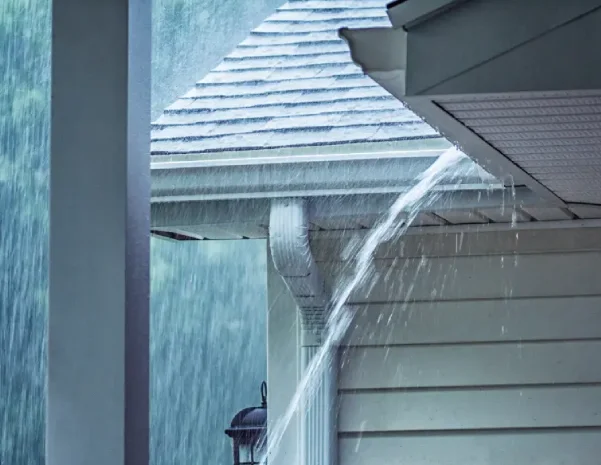
Living along the Tennessee Valley means dealing with rapid weather shifts. When warm southern air meets cooler mountain currents, Chattanooga neighborhoods often face intense wind gusts, sudden hail, and severe downpours. Surrounding ridges and steep elevation changes quickly direct heavy runoff into lower driveways, crawl spaces, and basements.
When exterior building materials fail during a severe downpour, prompt action determines whether drying is straightforward or structural repairs become extensive.
How Ridge Topography and Valley Storms Exploit Weak Points
Chattanooga homes face a distinct mix of wind patterns and elevation-driven runoff. Heavy hail fractures aged asphalt shingles and damages skylight flashing, creating direct paths for rainwater to enter attics. Straight-line winds push against exterior siding, lift loose shingles, and drop overhanging hardwood limbs onto roofs and gutters.
Surface runoff presents a serious challenge. Neighborhoods below ridgelines or near drainage basins often see stormwater bypass municipal ditches. Water pools around foundation walls, builds hydrostatic pressure, and seeps through basement masonry or crawl space vents.
Once rainwater penetrates an exterior wall or roof deck, gravity pulls it downward through fiberglass insulation, sheetrock, and subflooring. Moisture spreads beyond the visible entry point, often pooling inside wall cavities where airflow cannot reach it.
The Critical Window for Moisture Control and Claims
Saturated drywall and damp wood framing provide fertile ground for microbial growth in Tennessee’s humid climate. Fungal spores naturally present in the air can germinate on damp cellulose materials in under forty-eight hours. Arranging prompt mold inspections and testing in Chattanooga allows property owners to verify whether moisture has entered finished wall assemblies before secondary contamination spreads.
Delaying cleanup complicates property insurance claims. Most standard homeowner policies require policyholders to take reasonable steps to protect the property from ongoing damage after a storm. If standing water remains in a basement for several days without mitigation, carriers may question whether structural deterioration resulted from the storm or preventable neglect.
Document every damaged area with clear photos before moving items, keep damaged materials for adjusters to inspect, and secure professional mitigation records to create a clear timeline for your claim.
Steps for Stabilizing the Structure
Effective storm recovery requires a methodical sequence to ensure the building envelope is secure, dry, and clean.
- Initial Exterior Stabilization: Tarping exposed roof decks and boarding up compromised window openings stops ongoing weather from adding fresh water to the interior.
- Thermal Inspection and Moisture Mapping: Non-invasive moisture meters and infrared cameras reveal water paths hidden inside ceiling joists, beneath hardwood flooring, and behind baseboards.
- Bulk Water Extraction: Commercial pumps draw standing water from basements and crawl spaces, dramatically reducing indoor humidity levels.
- Controlled Dehumidification: Low-grain refrigerant dehumidifiers and high-velocity air movers draw deeply bound moisture out of structural timber and concrete.
- Antimicrobial Treatment and Deep Cleaning: Disinfecting affected surfaces prevents fungal growth, while specialized treatments address dirty rainwater residue before reconstruction begins.
Professional structural drying relies on balancing temperature, airflow, and vapor pressure rather than just using household box fans. Circulating damp air without industrial dehumidification pushes humid air deeper into dry framing members.
Restoring Structural Integrity
Restoration involves drying wet framing and repairing finished surfaces that protect your living space. If heavy water flowed across finished flooring or damaged drywall ceilings, full recovery may require selective material removal, insulation replacement, and specialized carpet cleaning before final paint and trim work.
Handling water mitigation and structural reconstruction under a single coordinated plan keeps repair schedules on track and eliminates communication gaps among trade crews.
When severe weather causes roof leaks, flooded foundations, or tree-fall damage on your property, our team at Rainbow Restoration of Chattanooga provides immediate structural stabilization, advanced drying, and complete property repair. Call us directly to secure your home and start the recovery process immediately.
Contact Chattanooga’s 24/7 Storm & Water Damage Specialists
If a recent storm left your property with roof leaks, broken windows, or standing water, don’t wait for secondary damage to take hold.
- Call Now for 24/7 Emergency Service
- Visit Online: Rainbow Restoration of Chattanooga
- Location & Directions: 1285 Scruggs Rd, Ringgold, GA 30736 (Google Maps)